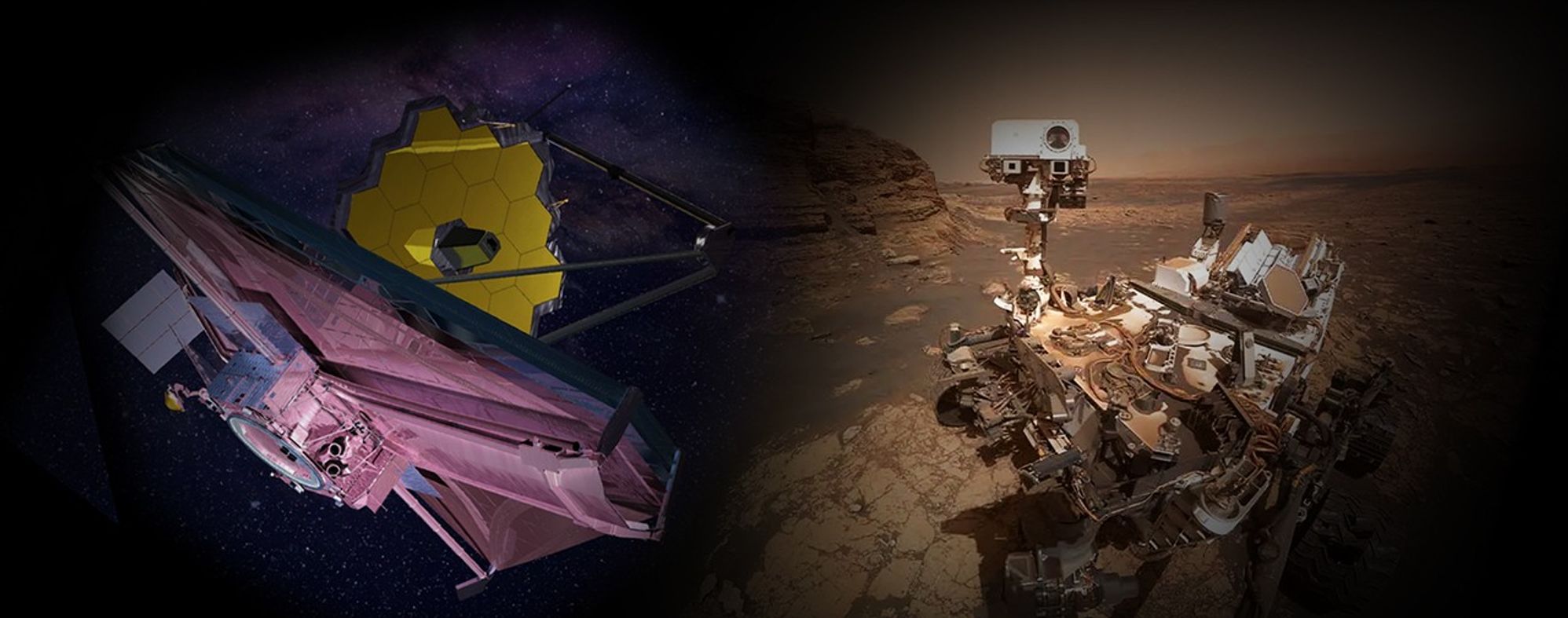
Two icons of discovery, NASA’s James Webb Space Telescope and NASA’s Curiosity rover, have earned places in TIME’s “Best Inventions Hall of Fame,” which recognizes the 25 groundbreaking inventions of the past quarter century that have had the most global impact, since TIME began its annual Best Inventions list in 2000. The inventions are celebrated in TIME’s December print issue.
“NASA does the impossible every day, and it starts with the visionary science that propels humanity farther than ever before,” said Nicky Fox, associate administrator, Science Mission Directorate, NASA Headquarters in Washington. “Congratulations to the teams who made the world’s great engineering feats, the James Webb Space Telescope and the Mars Curiosity Rover, a reality. Through their work, distant galaxies feel closer, and the red sands of Mars are more familiar, as they expanded and redefined the bounds of human achievement in the cosmos for the benefit of all.”
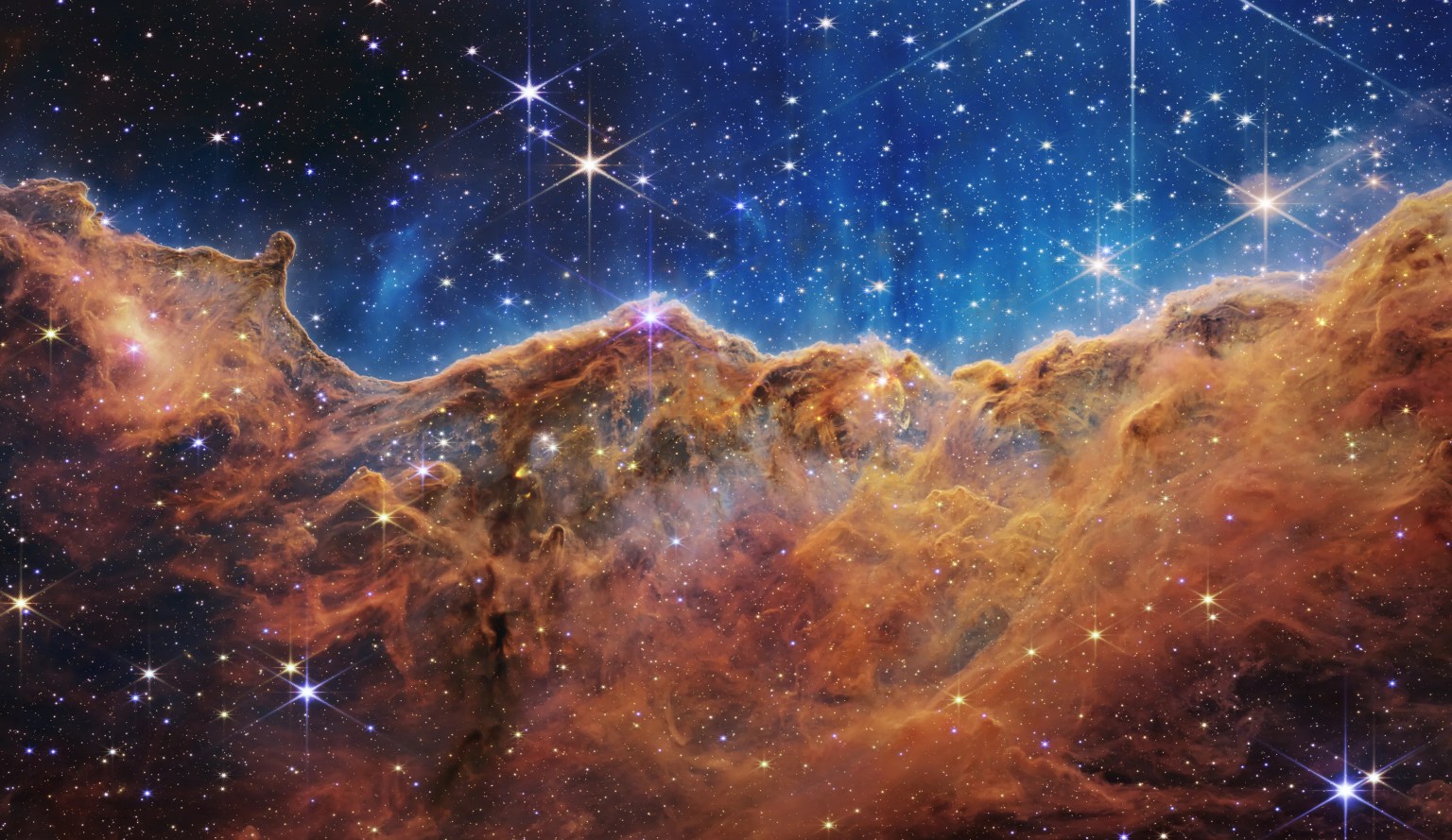
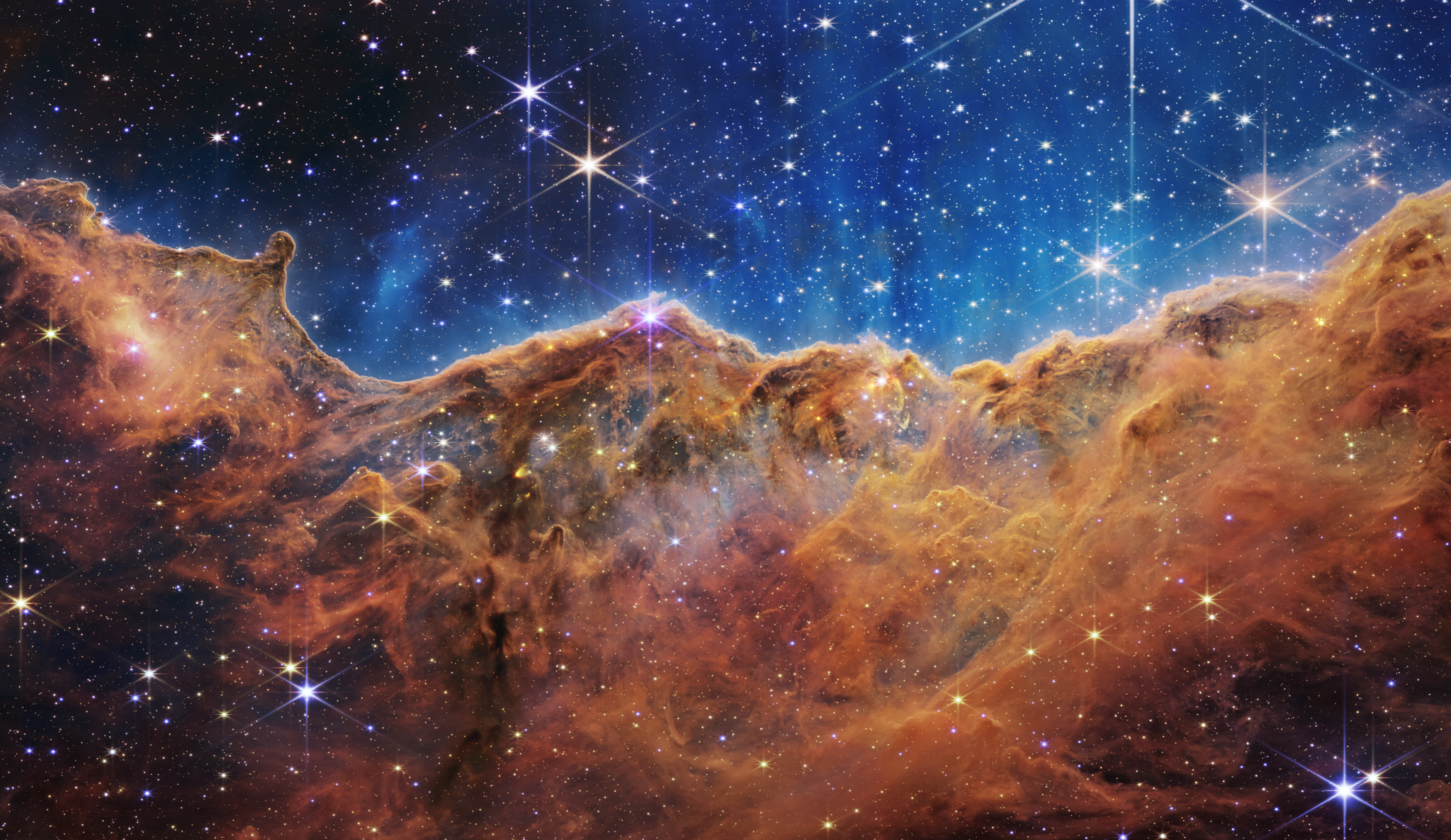
Decades in the making and operating a million miles from Earth, Webb is the most powerful space telescope ever built, giving humanity breathtaking views of newborn stars, distant galaxies, and even planets orbiting other stars. The new technologies developed to enable Webb’s science goals – from optics to detectors to thermal control systems – now also touch Americans’ everyday lives, improving manufacturing for everything from high-end cameras and contact lenses to advanced semiconductors and inspections of aircraft engine components.
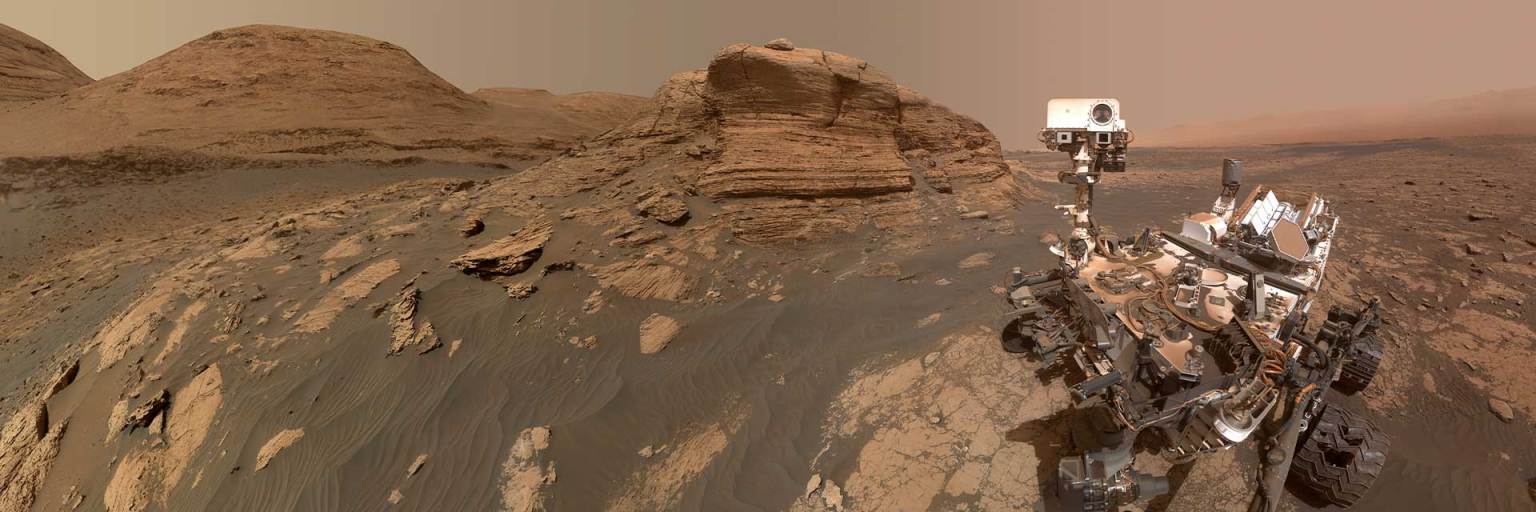
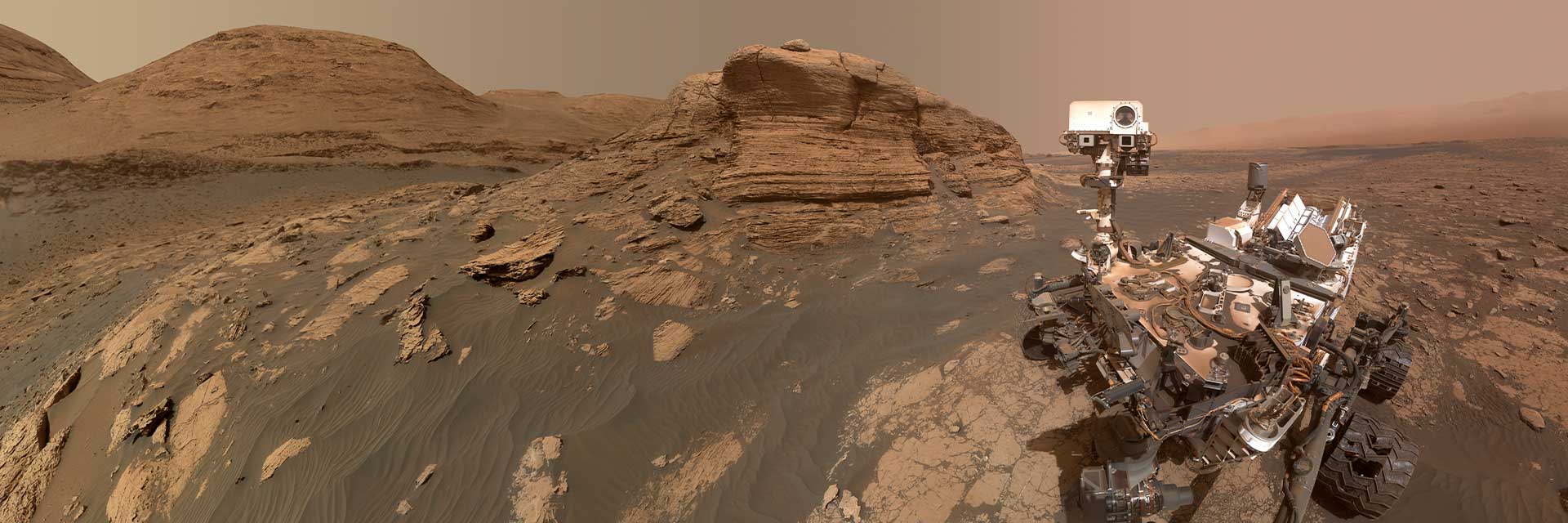
Meanwhile on Mars, the unstoppable Curiosity rover, NASA’s car-size science lab, has spent more than a decade uncovering clues that the Red Planet once could have supported life, transforming our understanding of our planetary neighbor. These NASA missions continue to make breakthroughs that have reshaped our understanding of the universe and our place in it. Curiosity has also paved the way for future astronauts: Its Radiation Assessment Detector has studied the Martian radiation environment for nearly 14 years, and its unforgettable landing by robotic jetpack allowed heavier spacecraft to touch down on the surface — a capability that will be needed to send cargo and humans to Mars.
To compile this “Hall of Fame” list, TIME solicited nominations from TIME editors and correspondents around the world, paying special attention to high-impact fields, such as health care and technology. TIME then evaluated each contender on a number of key factors, including originality, continued efficacy, ambition, and impact.
The James Webb Space Telescope is the world’s premier space science observatory. Webb is solving mysteries in our solar system, looking beyond to distant worlds around other stars, and probing the mysterious structures and origins of our universe and our place in it. Webb is an international program led by NASA with its partners, ESA (European Space Agency) and CSA (Canadian Space Agency).
The Curiosity rover was built by NASA’s Jet Propulsion Laboratory, which is managed by Caltech in Pasadena, California. JPL leads the mission on behalf of NASA’s Science Mission Directorate in Washington as part of NASA’s Mars Exploration Program portfolio.
To learn more about NASA’s science missions, visit: