Building Roman
NASA/Sophia Roberts
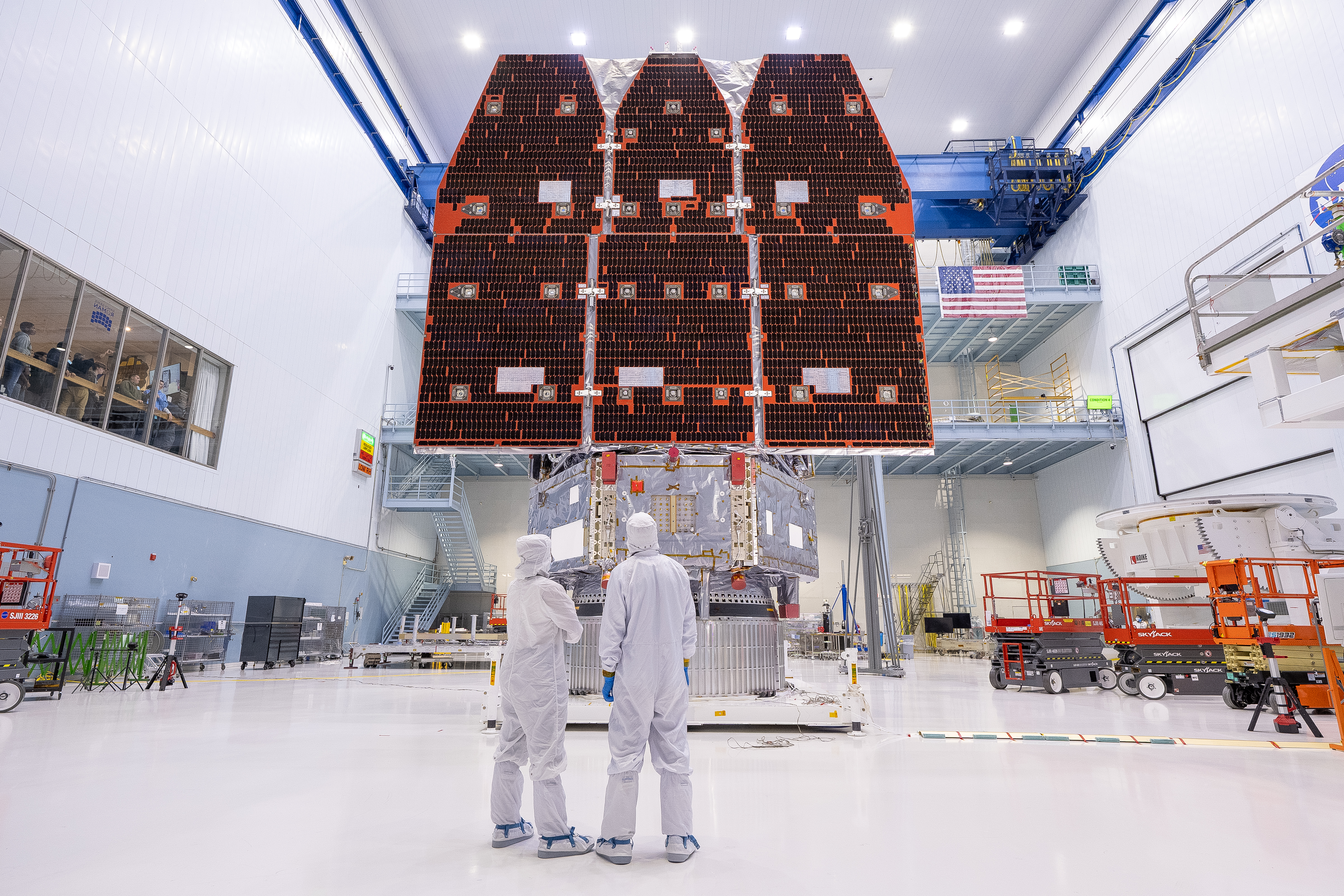
Technicians have completed the construction of NASA’s Nancy Grace Roman Space Telescope.
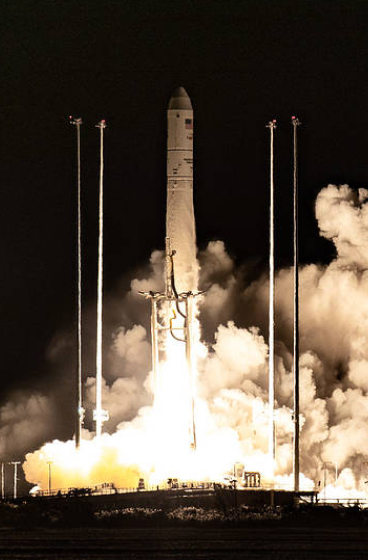
The Roman observatory is slated to launch no later than May 2027, with the team aiming for as early as fall 2026. The mission will revolutionize our understanding of the universe with its deep, crisp, sweeping views of space.
More than a thousand technicians and engineers assembled Roman from millions of individual components. Many parts were built and tested simultaneously to save time. Now that the observatory is assembled, it will undergo a spate of testing prior to shipping to NASA’s Kennedy Space Center in Florida in summer 2026.
Telescope
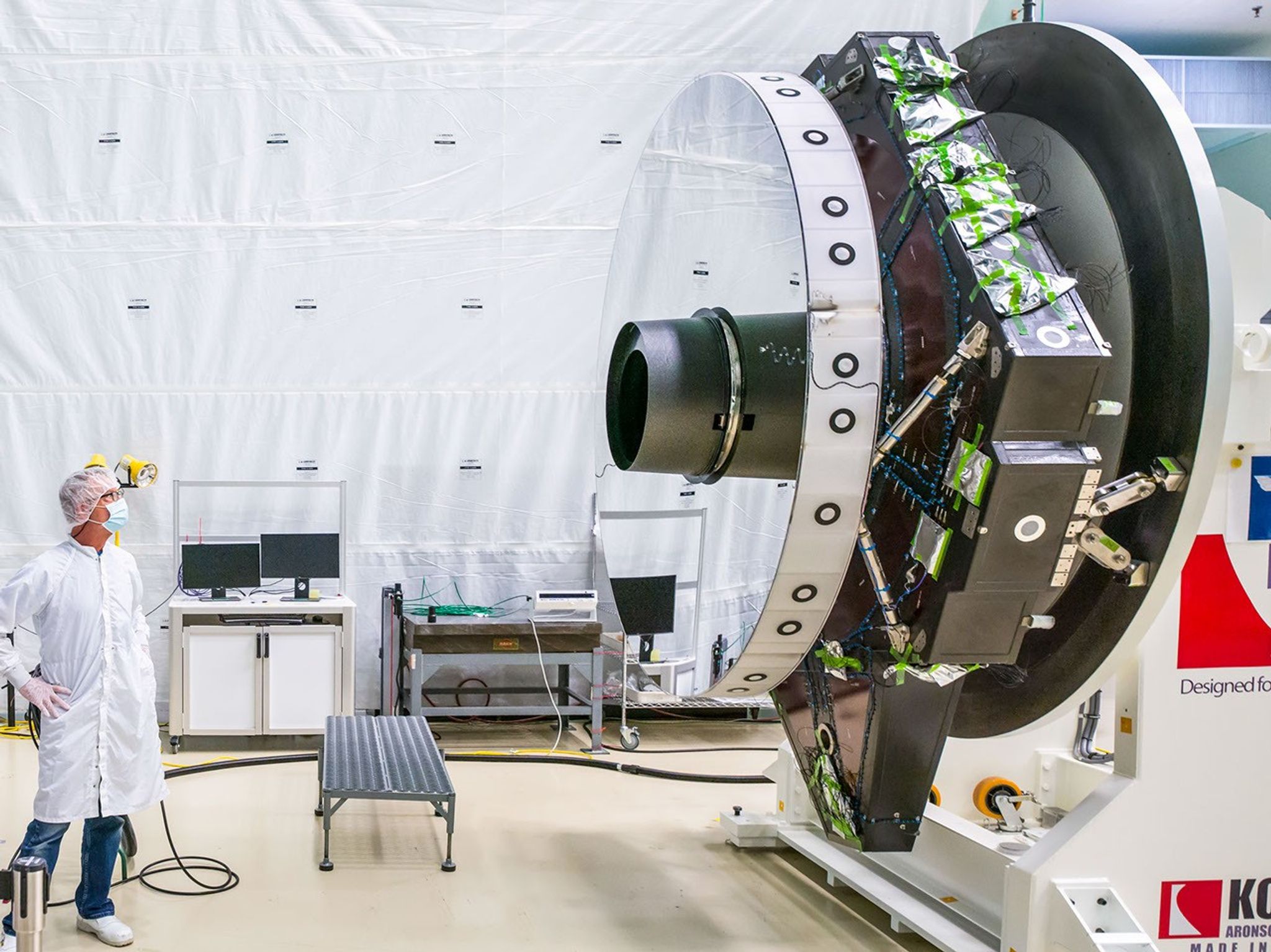
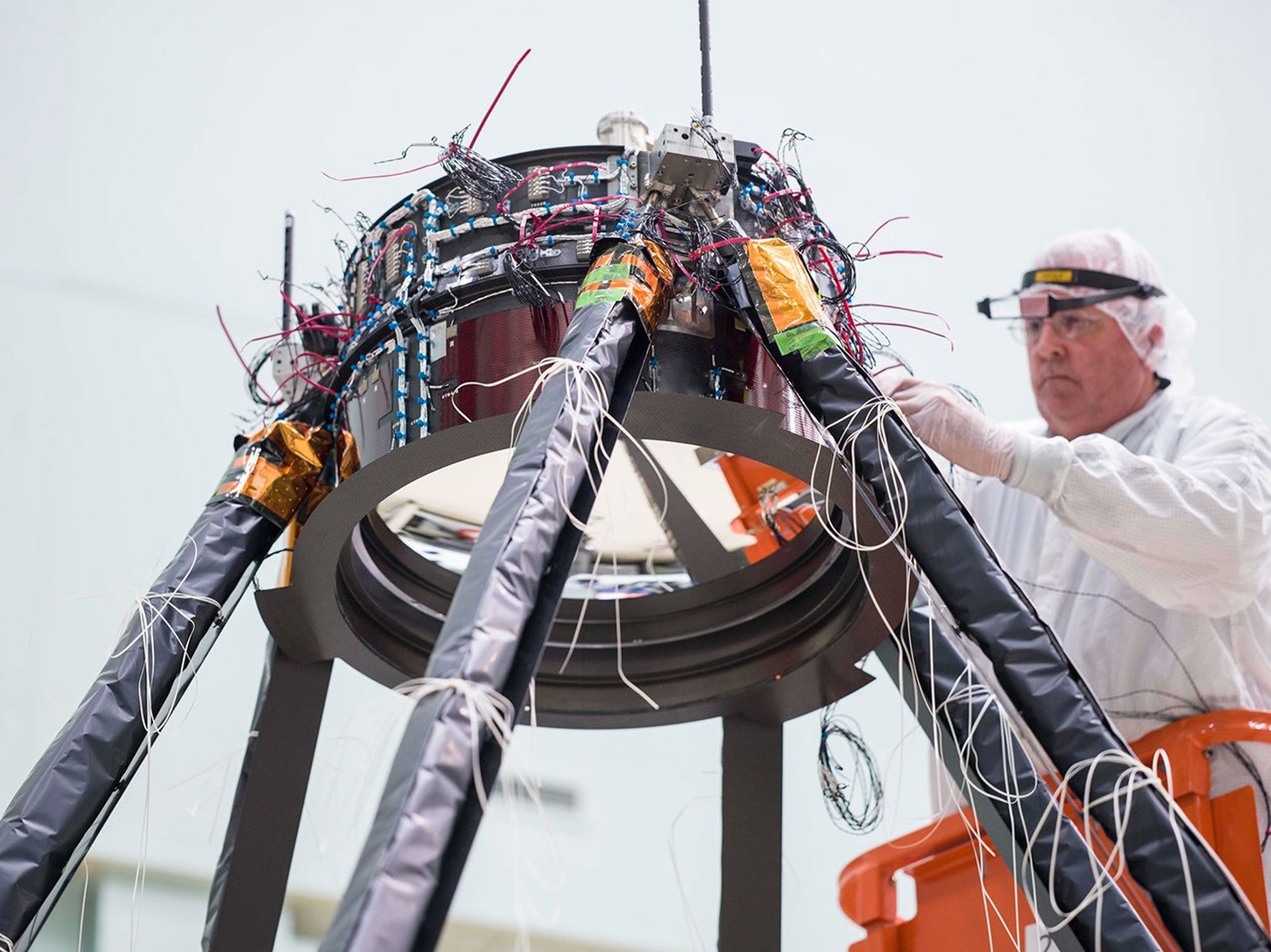
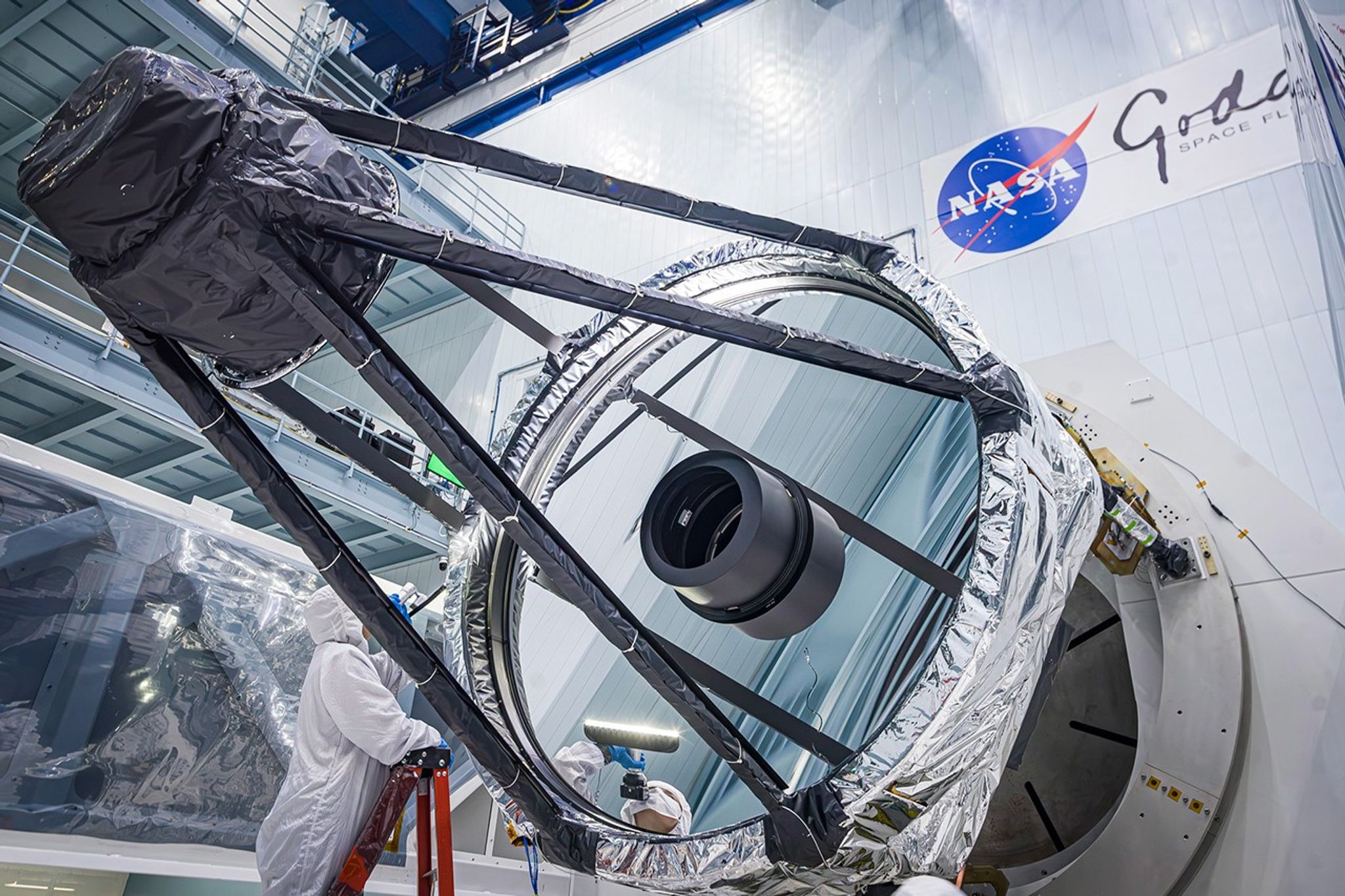
The Optical Telescope Assembly is the heart of the Roman observatory. It consists of a primary mirror, which was designed and built at L3Harris Technologies in Rochester, New York, plus nine additional mirrors and supporting structures and electronics.
The Roman team got a jumpstart by receiving the telescope’s primary mirror, which will collect and focus light from cosmic objects near and far, from another government agency and then modifying it to meet NASA’s needs. Using this mirror, Roman will capture stunning space vistas with a field of view at least 100 times larger than Hubble’s.
Roman will peer through dust and across vast stretches of space and time to study the universe using infrared light, which human eyes can’t see. The amount of detail these observations will reveal is directly related to the size of the telescope’s mirror, since a larger surface gathers more light and measures finer features. Roman’s primary mirror is 7.9 feet (2.4 meters) across, the same size as the Hubble Space Telescope’s main mirror but less than one-fourth the weight (410 pounds, or 186 kilograms) thanks to major improvements in technology.
“The telescope will be the foundation of all of the science Roman will do, so its design and performance are among the largest factors in the mission’s survey capability.”

Josh Abel
lead Optical Telescope Assembly systems engineer at NASA Goddard
NASA/Chris Gunn
NASA/Chris Gunn
NASA/Chris Gunn
NASA/Chris Gunn
The primary mirror, in concert with other optics, will send light to Roman’s two science instruments: the Wide Field Instrument and Coronagraph Instrument. When light enters Roman’s 2.4-meter aperture, it will be reflected and focused by the curved primary mirror and then reflected and focused once more by the secondary mirror. Then, light from different parts of the sky splits off toward each instrument, so Roman will be able to use both at once.
The telescope was delivered Nov. 7, 2024, to the largest clean room at NASA’s Goddard Space Flight Center in Greenbelt, Maryland.
Credit: NASA/Chris Gunn
Detectors
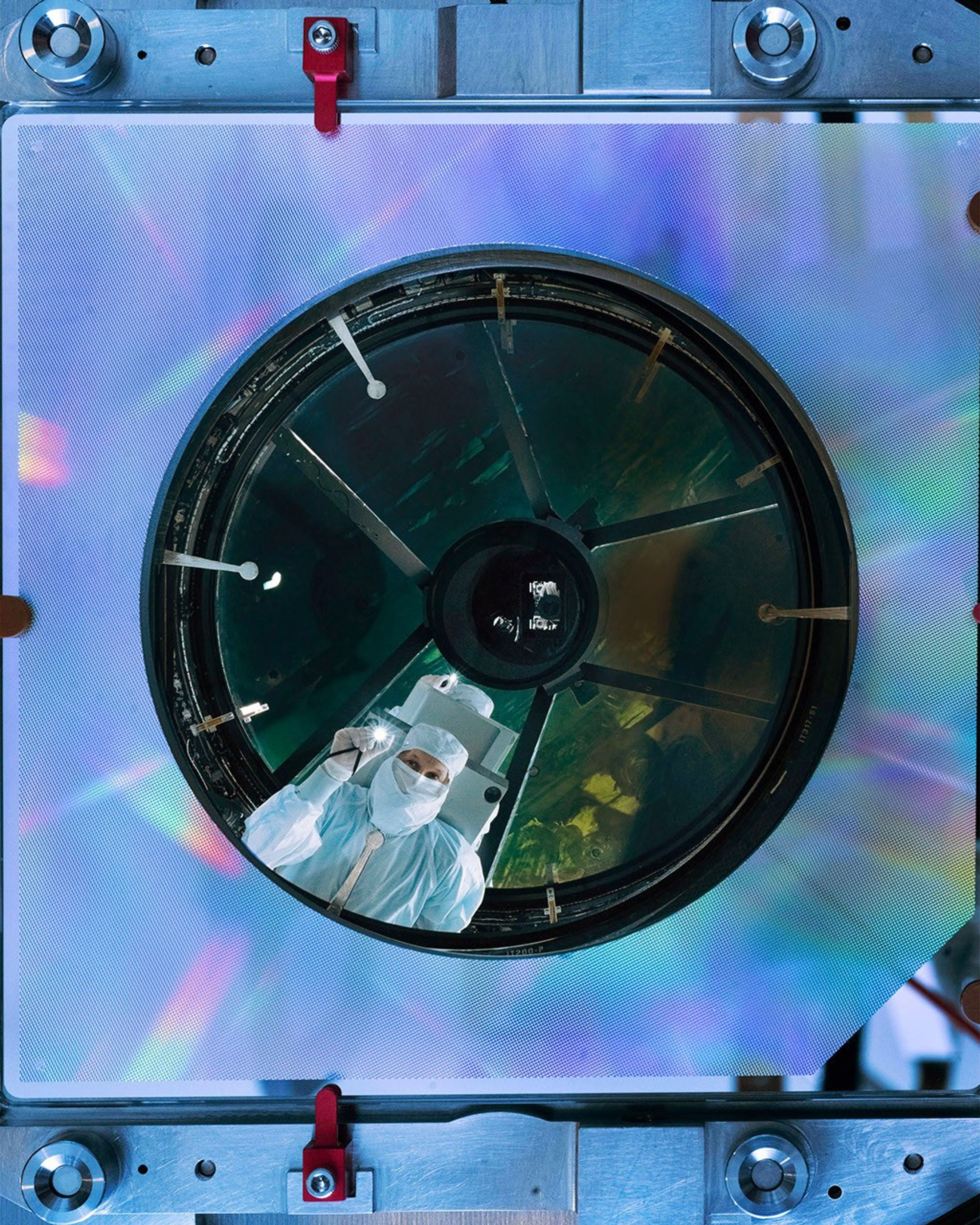
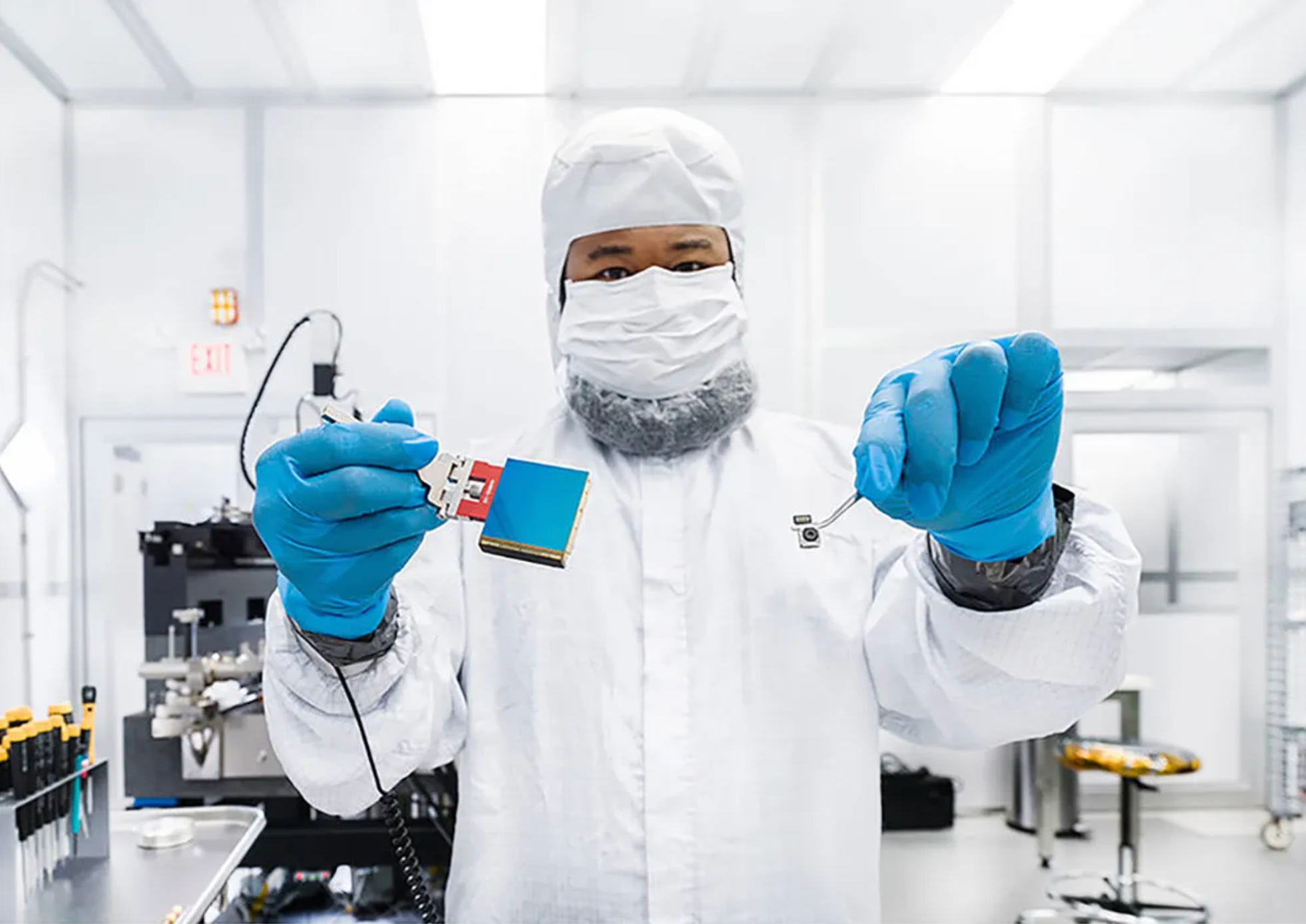
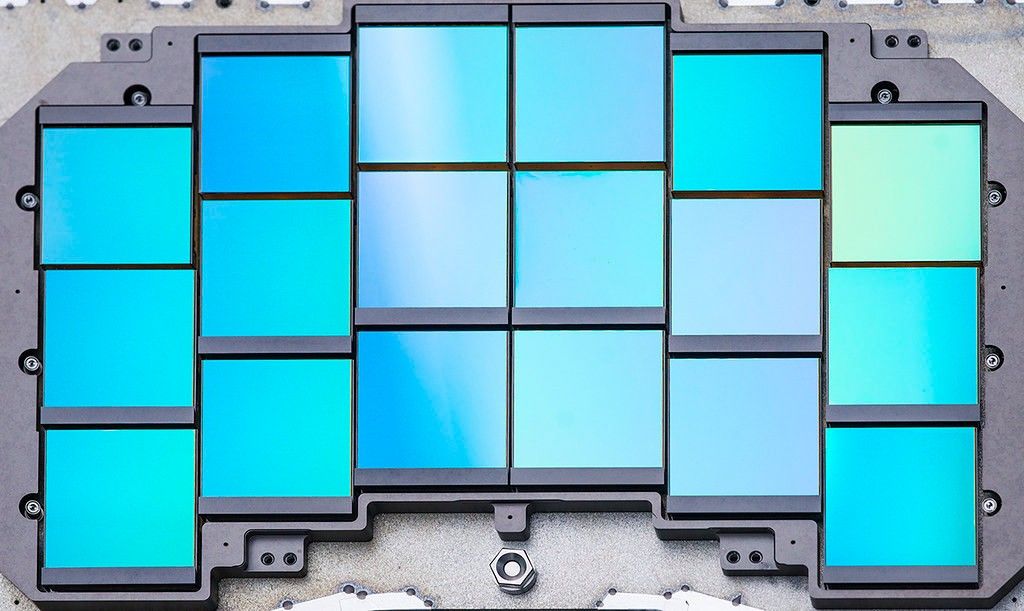
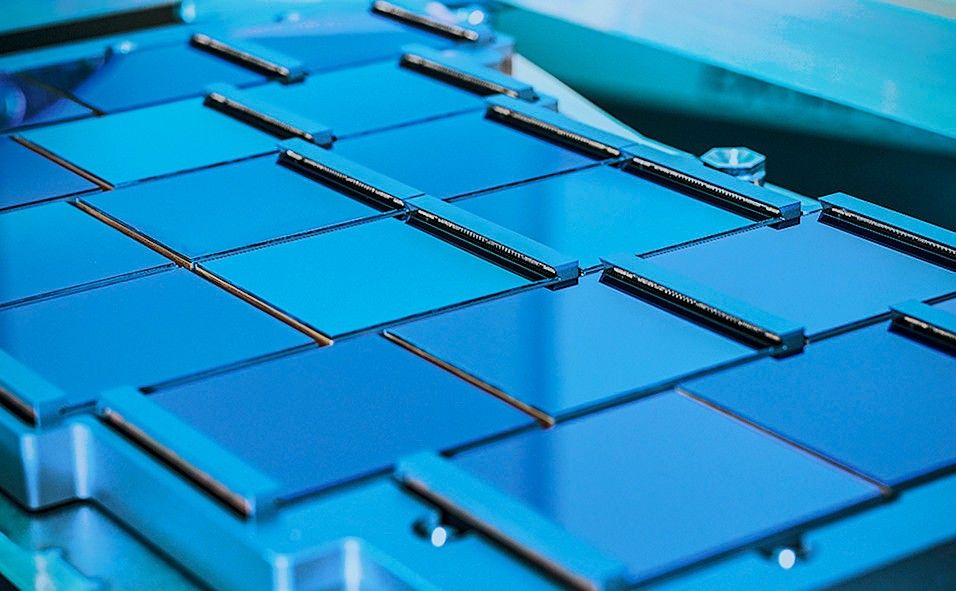
Meanwhile, technicians at Goddard and Teledyne Scientific & Imaging were developing the detector array. This device will convert starlight into electrical signals, which will then be decoded into 288-megapixel images of large patches of the sky. The combination of Roman’s fine resolution and enormous images has never been possible on a space-based telescope before.
Roman uses state-of-the-art sensors that build on the legacy of the infrared detectors in NASA’s Hubble and Webb instruments. Roman’s focal plane, however, is much larger to capture a much larger field of view.
Greg Mosby
research astrophysicist at NASA Goddard
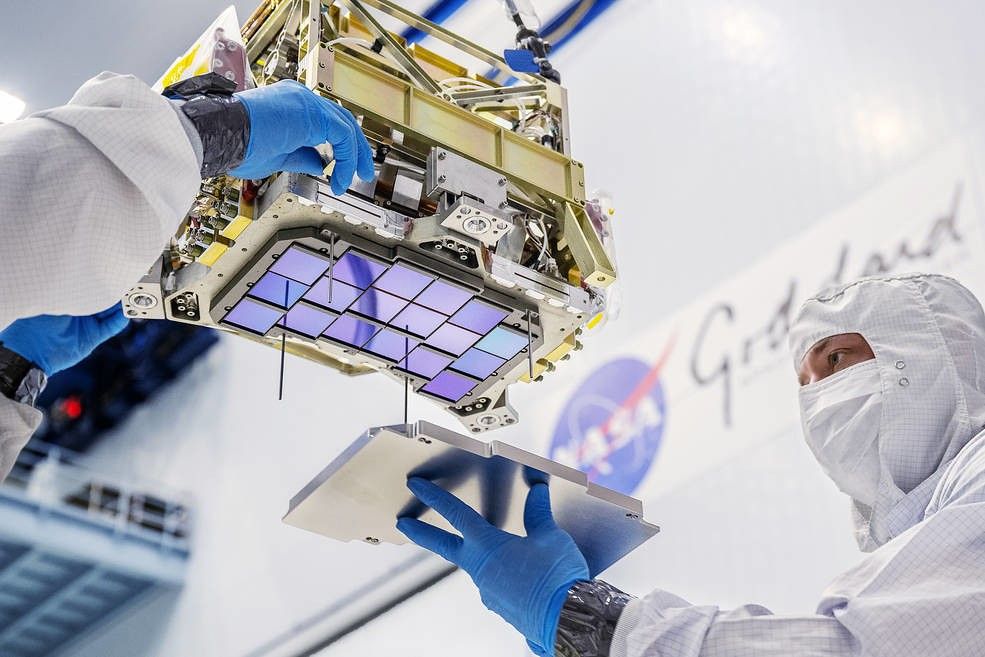
The detectors, each the size of a saltine cracker, have 16 million tiny pixels apiece, providing the mission with exquisite image resolution. Eighteen were incorporated into the focal plane array for Roman’s camera, and another six are reserved as flight-qualified spares.
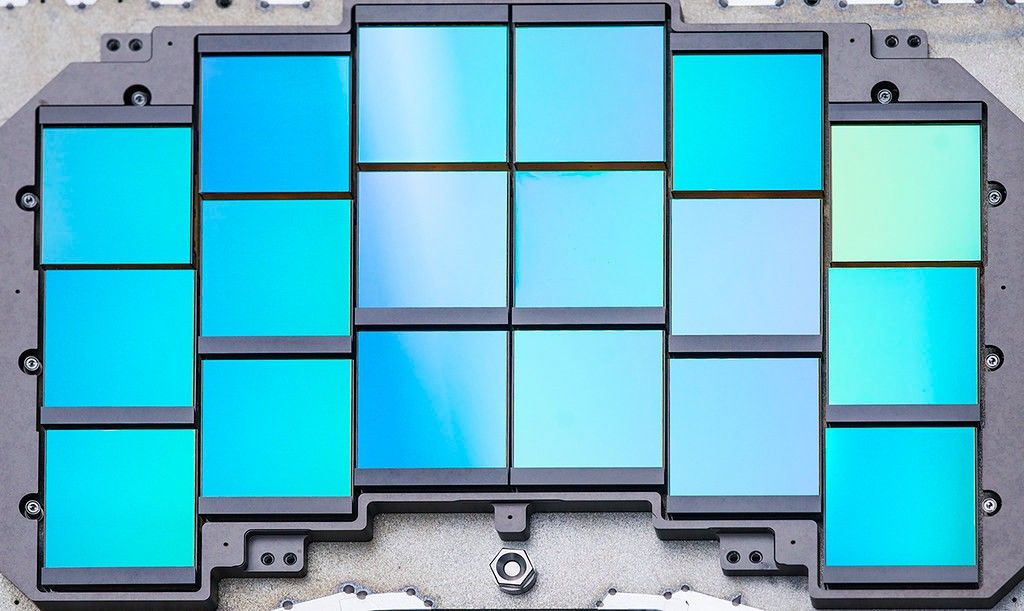
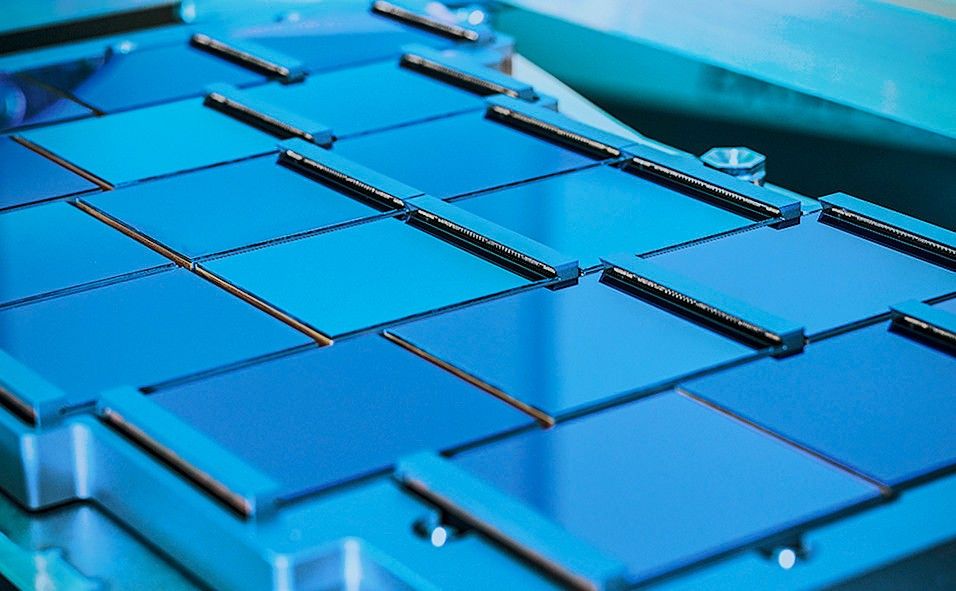
Detector Array
Detector Array
Roman’s Detectors
Mosaic Plate Assembly
Credit: NASA/Chris Gunn
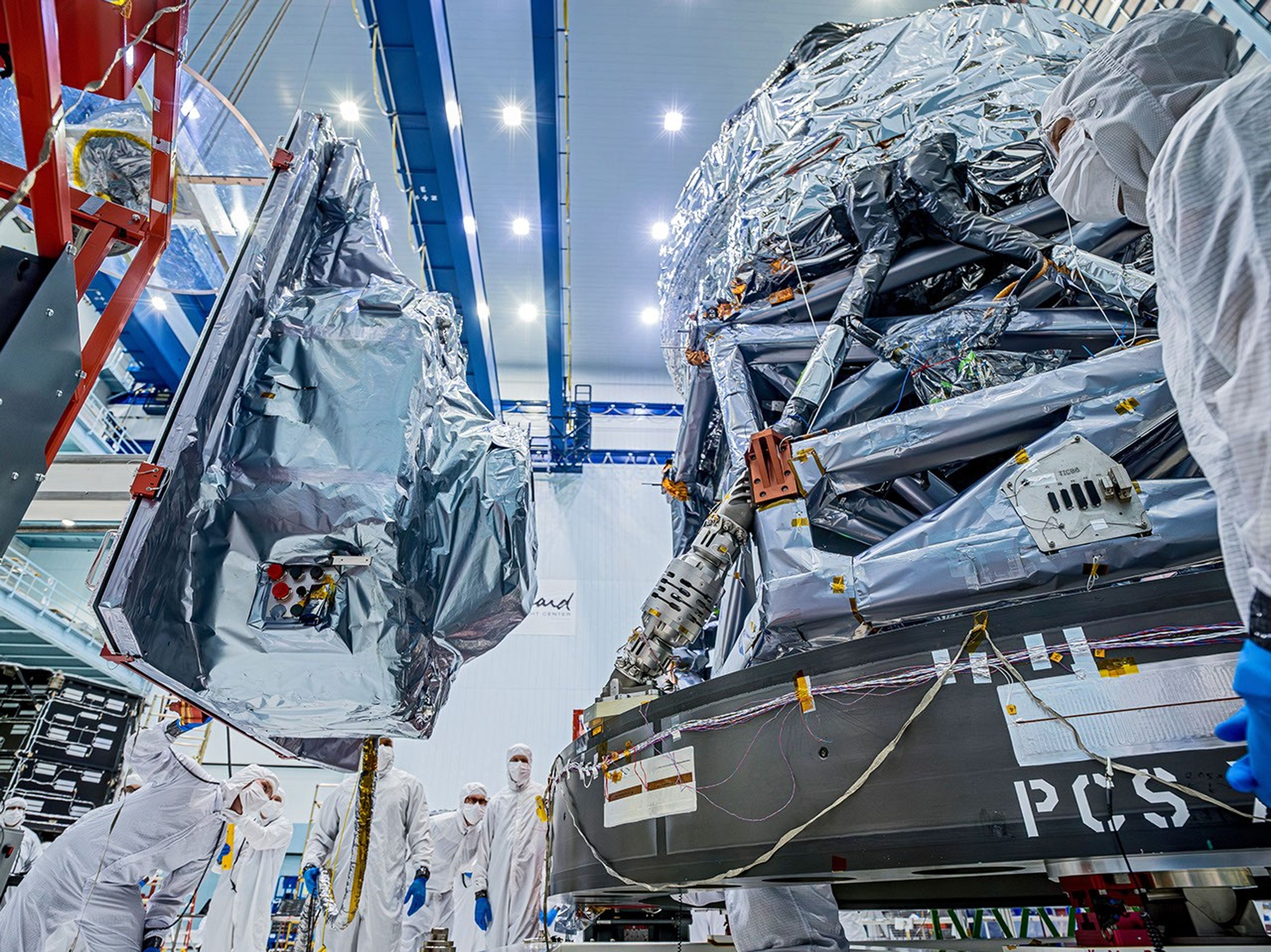
Once complete and tested, the detector array was inserted into the mission’s primary instrument: a sophisticated camera called the Wide Field Instrument, which was assembled and tested at Goddard and BAE Systems, Inc.
Wide Field Instrument
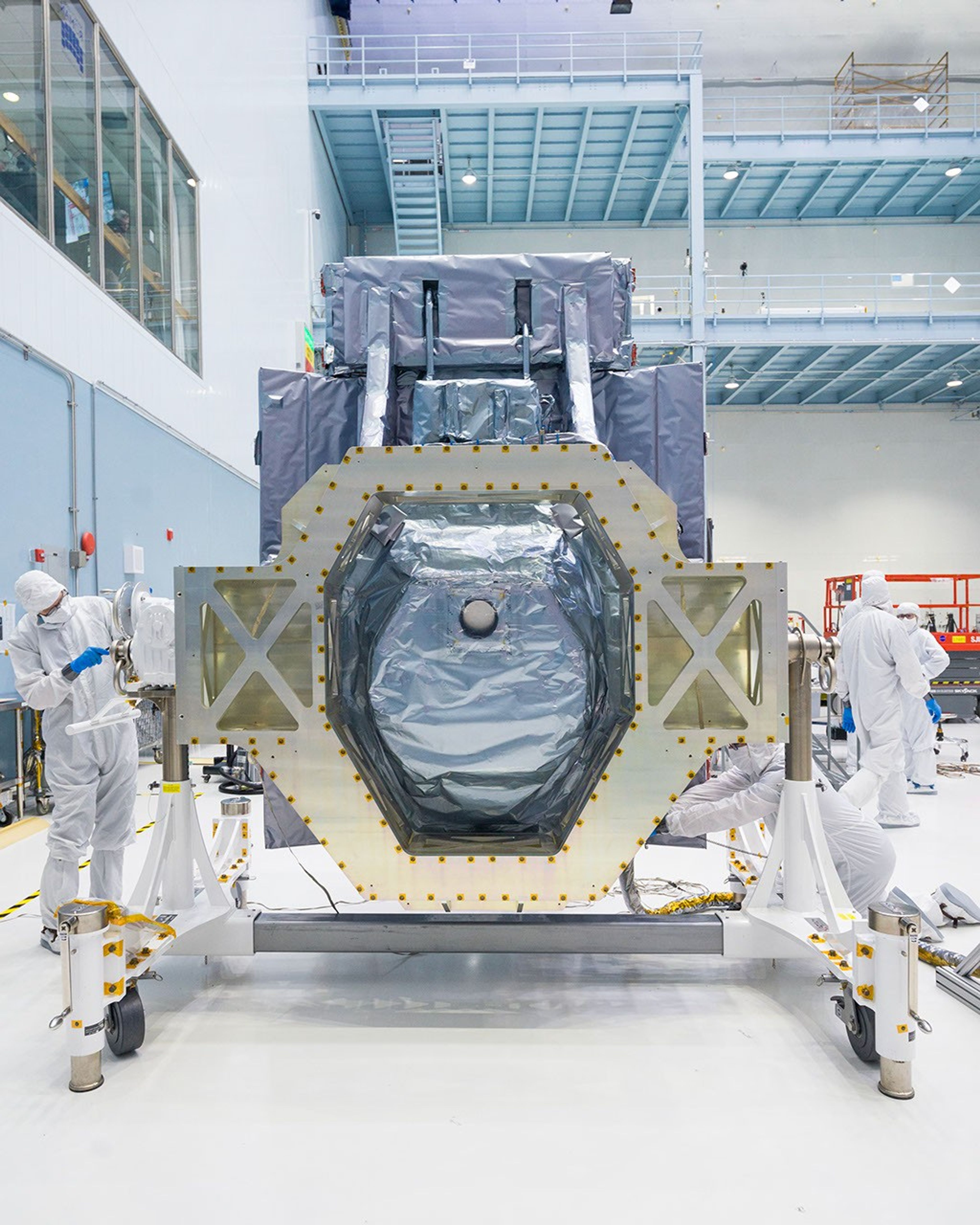
The Wide Field Instrument, or WFI, is an infrared camera that will give Roman the same angular resolution as Hubble but with a field of view at least 100 times larger. Its sweeping cosmic surveys will help scientists discover new and uniquely detailed information about planets beyond our solar system, untangle mysteries like dark energy, and map how matter is structured and distributed throughout the cosmos. The mission’s broad, crisp view will produce an extraordinary resource for a wide range of additional investigations.
Using this instrument, each Roman image will capture a patch of the sky bigger than the apparent size of a full moon. The mission will gather data hundreds of times faster than Hubble, adding up to 20,000 terabytes (20 petabytes) over the course of its five-year primary mission.
NASA/Chris Gunn
NASA/Chris Gunn

Ball Aerospace
Technicians from both BAE and Goddard put the WFI together in a clean room in Boulder, Colorado. Then the team completed full environmental testing in space-like conditions and delivered the WFI to Goddard in summer 2024. It was joined to other observatory systems the following winter.
Coronagraph Instrument
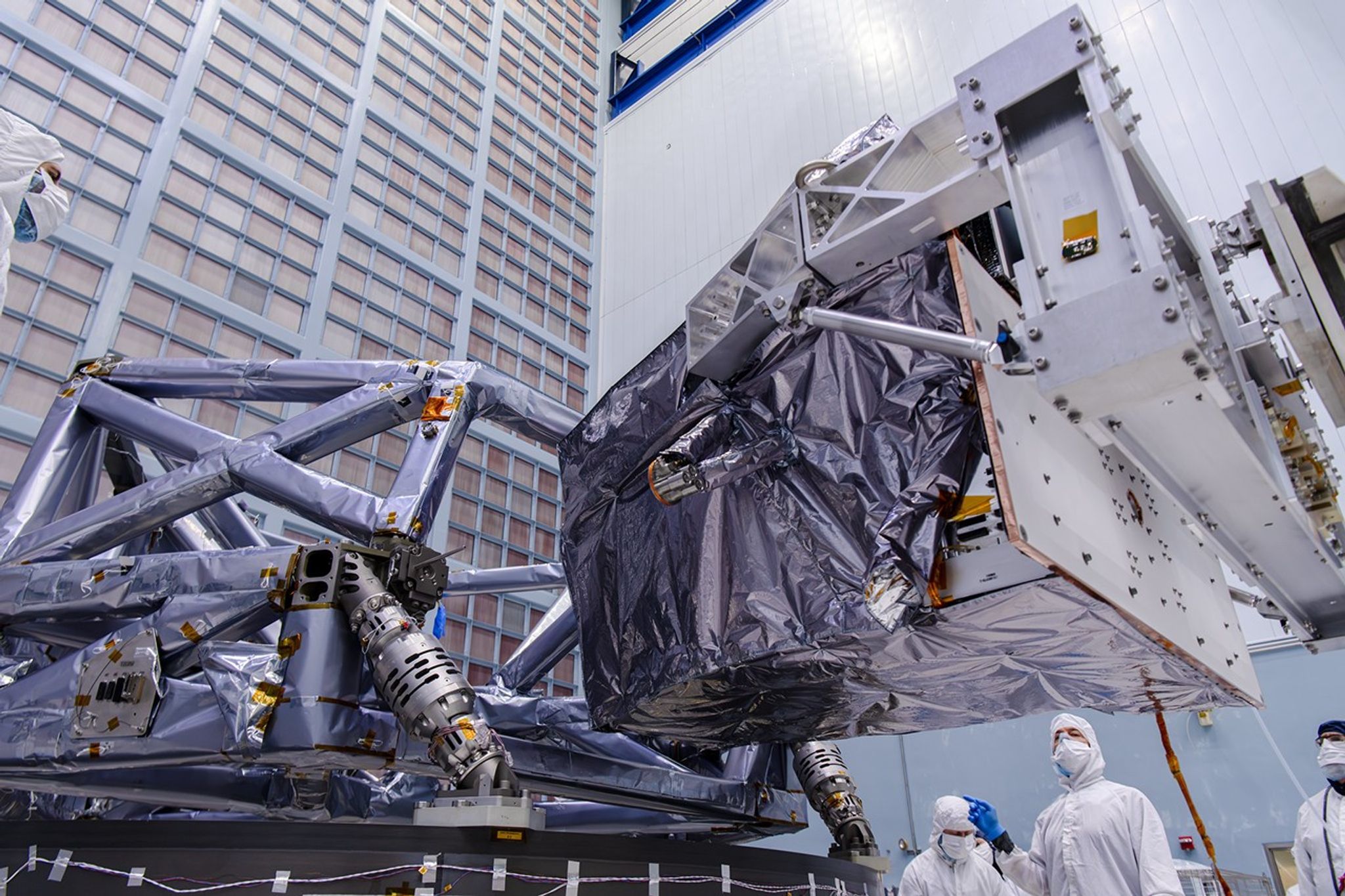
Technicians at NASA’s Jet Propulsion Laboratory built the Coronagraph Instrument. The Coronagraph will demonstrate new technologies for directly imaging planets around other stars. It will block the glare from distant stars and make it easier for scientists to see the faint light from planets in orbit around them. The Coronagraph aims to photograph worlds and dusty disks around nearby stars in visible light to help us see giant worlds that are older, colder, and in closer orbits than the hot, young super-Jupiters direct imaging has mainly revealed so far.
The coronagraph team will conduct a series of pre-planned observations for three months spread across the mission’s first year-and-a-half of operations, after which the mission may conduct additional observations based on scientific community input.
Following testing JPL, the Coronagraph was delivered to Goddard in May 2024. It was integrated onto Roman’s Instrument Carrier, a piece of infrastructure that will hold the mission’s instruments, in October 2024. Then the instrument carrier was joined to the spacecraft in December 2024.
NASA/Sydney Rohde

NASA/JPL-Caltech

NASA/JPL-Caltech
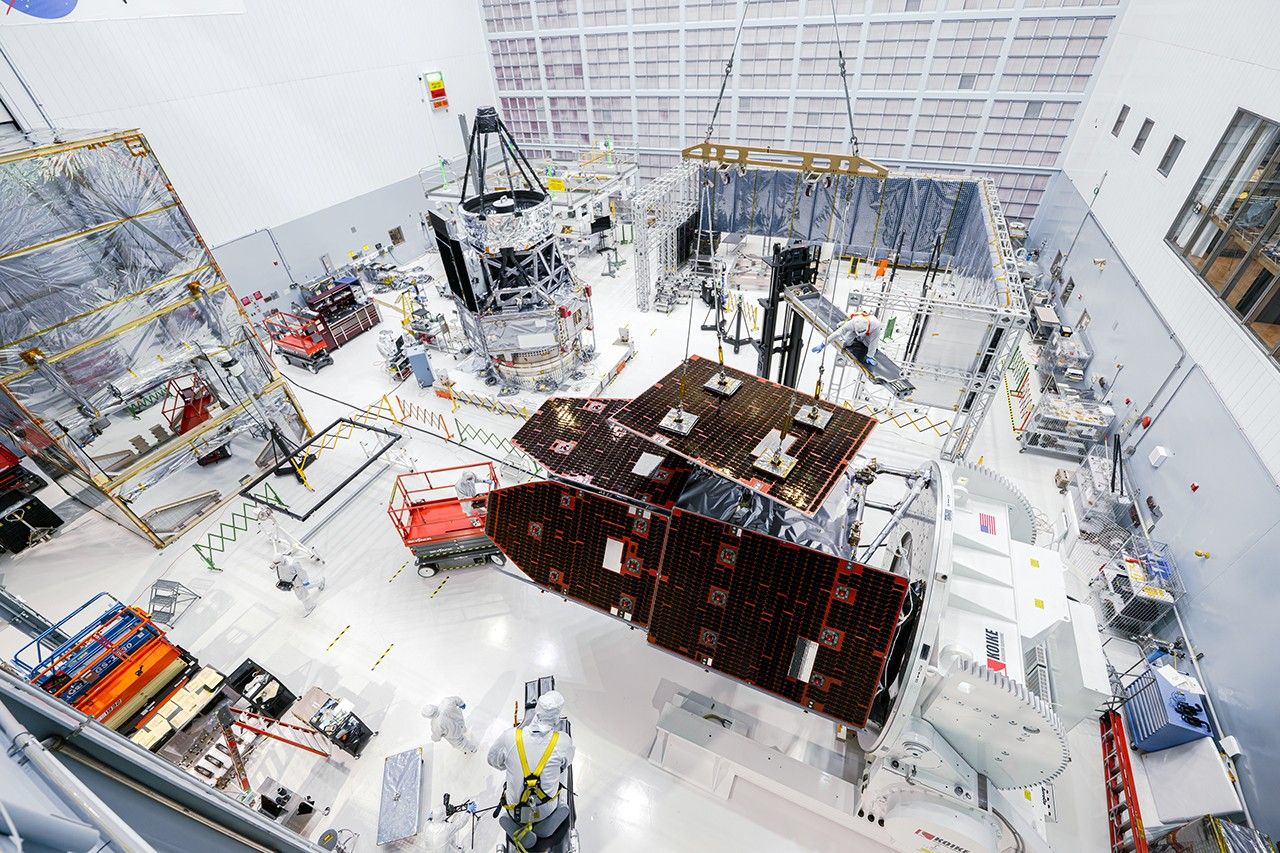
By 2025, all of Roman’s components were complete and undergoing testing as subsystems. Technicians installed test versions of the Solar Array Sun Shield panels onto the Outer Barrel Assembly — a part of the observatory that will protect and shade the primary mirror — inside Goddard’s largest clean room in preparation for testing.
The team covered Roman’s telescope section in a protective tent and pushed it out of the clean room using pressurized air to float it like a hovercraft. Then they lifted it onto a shaker table for vibration testing to simulate launch stress. Then, technicians moved the components into the Space Environment Simulator chamber for a month of testing at low pressure and different temperatures, mimicking space-like conditions.
Solar Panels
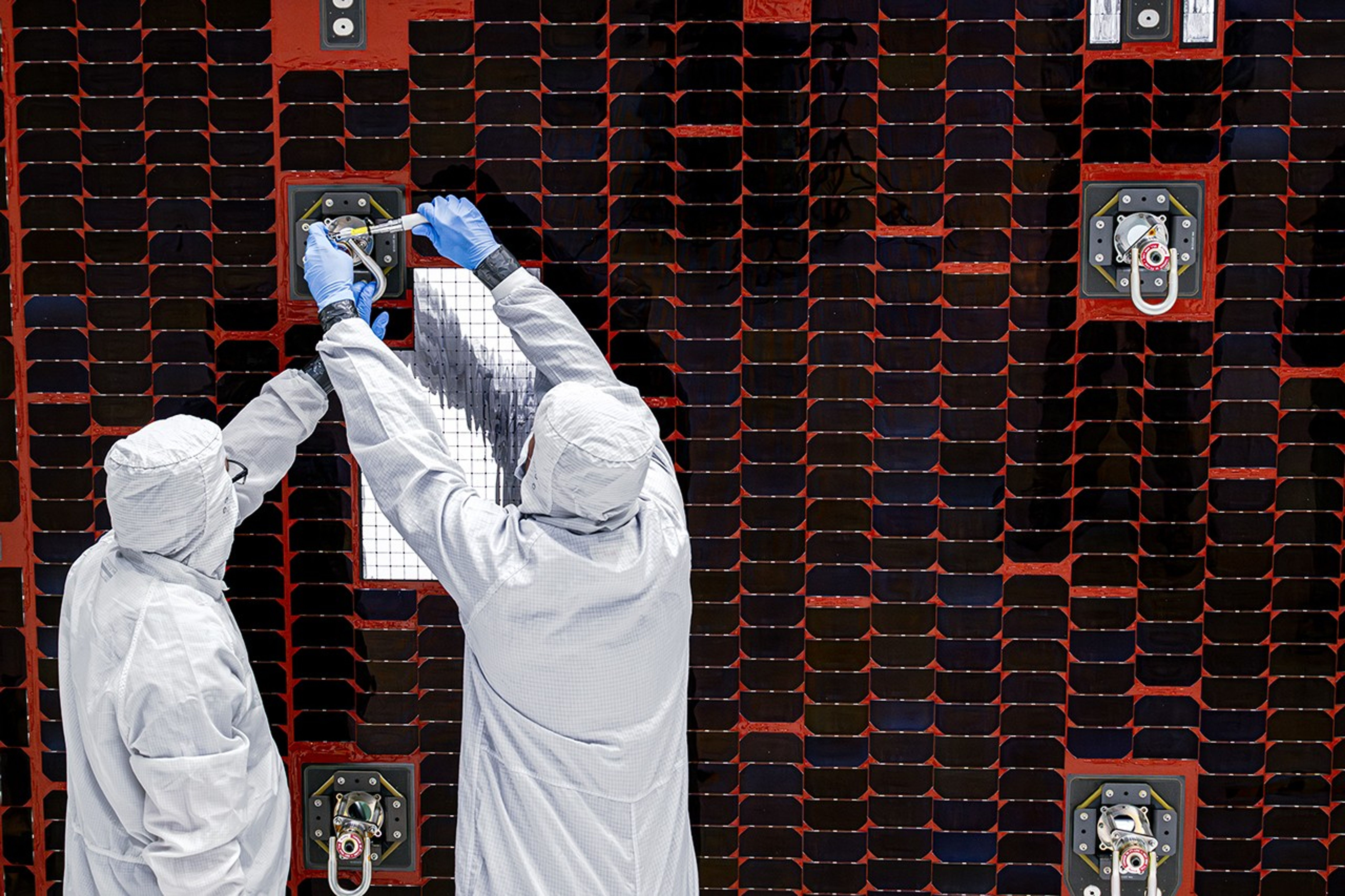
Roman’s Solar Array Sun Shield is made up of six panels, each covered in solar cells. The two central panels will remain fixed to the Outer Barrel Assembly while the other four will deploy once Roman is in space, swinging up to align with the center panels.
The panels will spend the entirety of the mission facing the Sun to provide a steady supply of power to the observatory’s electronics. This orientation will also shade much of the observatory and help keep the instruments cool, which is critical for an infrared observatory. Since infrared light is detectable as heat, excess warmth from the spacecraft’s own components would saturate the detectors and effectively blind the telescope.
NASA/Sydney Rohde
Credit: NASA/Sydney Rohde
Technicians installed Roman’s solar panels in June of 2025, followed by the Lower Instrument Sun Shield — a smaller set of panels that will play a critical role in keeping Roman’s instruments cool and stable. Technicians practiced deploying the solar panels and Deployable Aperture Cover — a visor-like sunshade.
By fall 2025, the observatory was in two major segments. The inner portion included the telescope, instrument carrier, two instruments, and spacecraft bus while the outer portion consisted of the outer barrel assembly, deployable aperture cover, and solar panels. The outer portion passed a shake test and an intense sound blast while the inner portion underwent a 65-day thermal vacuum test.
On November 25, 2025, technicians joined the two segments together and the observatory was complete.
“With Roman’s construction complete, we are poised at the brink of unfathomable scientific discovery. In the mission’s first five years, it’s expected to unveil more than 100,000 distant worlds, hundreds of millions of stars, and billions of galaxies. We stand to learn a tremendous amount of new information about the universe very rapidly after Roman launches.”
Julie Mcenery
Roman senior project scientist at NASA Goddard
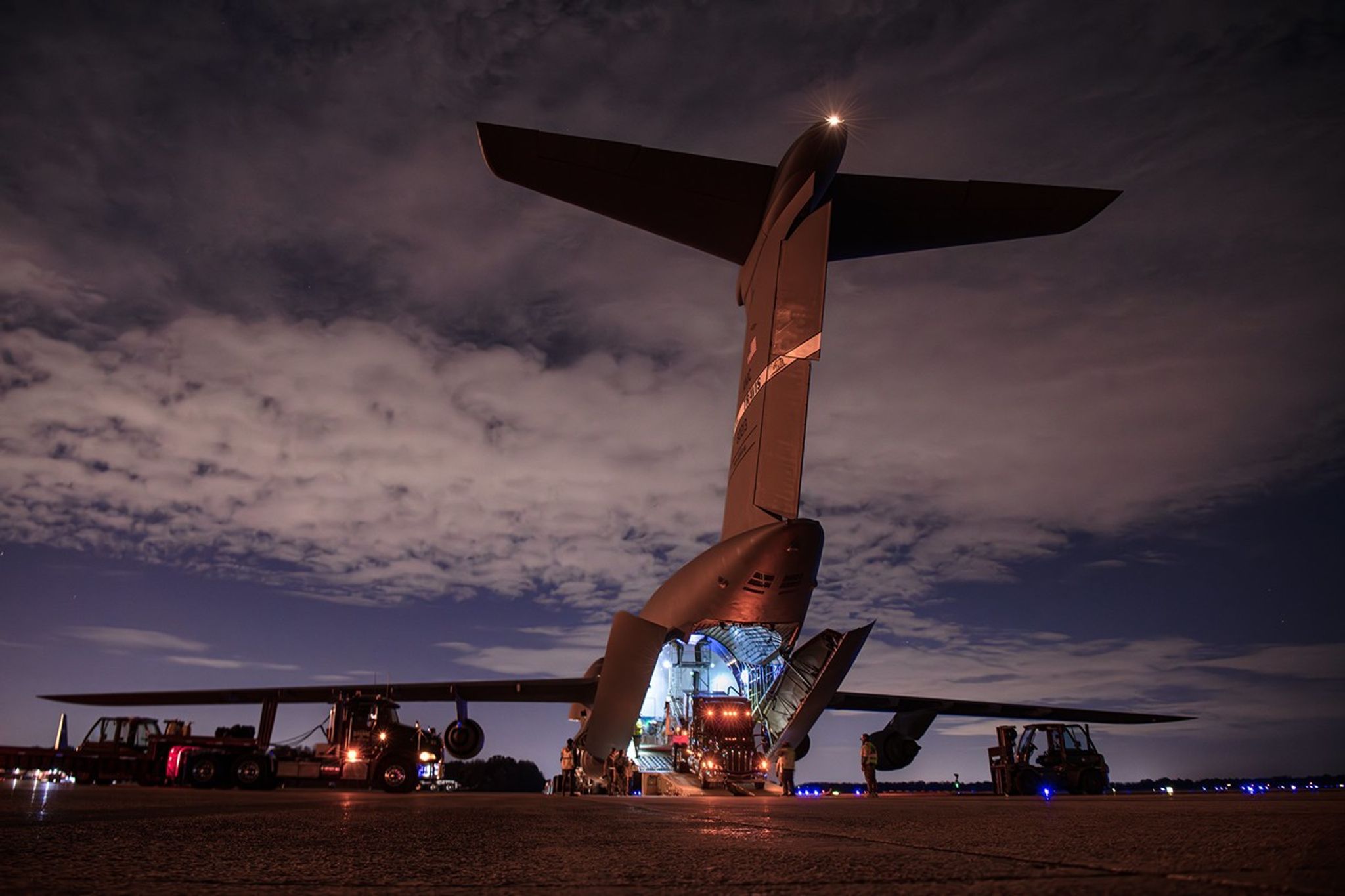
Now, Roman will undergo testing as a full observatory. Roman will move to the launch site at NASA’s Kennedy Space Center in Florida for launch preparations in summer 2026. Roman is slated to launch by May 2027, but the team is on track for launch as early as fall 2026. Follow along on the journey to launch at nasa.gov/roman.
Explore more Roman observatory photos:

About the Author

Ashley Balzer
Ashley is the lead science writer for NASA’s Nancy Grace Roman Space Telescope.